
Buying a folding bike

Earlier this year, I moved to the suburbs of Hong Kong and bought the first car of my adulthood this year in preparation for my new entry into family life. A downside of living in the suburbs in Hong Kong is that one needs to take a bus or drive to get to a proper commercial gym. An upside, though is that there are cycling paths everywhere. All I needed was a bike!
I could have used the QR code rental bikes that are all along the cycling paths in Hong Kong, but both my origin and destination of my gym commute are not immediately on the cycling path and therefore outside the service area of these GPS monitored & restricted bikes. Instead, I decided to get a folding bike with the idea that I could occasionally fold it up, put in the trunk of my car or push it on to the MTR and take to it remote places in Hong Kong and the mainland to go cycling.
When I first got this idea earlier this year, I visited a shop called LifeWheels in the OCT Loft area of Shenzhen that exclusively sells folding bikes. It also was a coffee shop. I walked in and said I was looking for a folding bike. Little did I know that folding bikes in China have been a major hobbyist subculture with a zillion models. Folding bikes now range from super cheap traditional Dahon-style, one hinge-in-the-middle-of-the-frame folding bikes to very expensive Brompton-style "tri-fold" (two hinges on the main frame) bikes with prices approaching some of inexpensive entry level EVs in China. Like other industries, a number of Chinese folding bike brands had recently popped up and they are very busy trying to outcompete each other in a consumer-friendly game of involution.
One of the staff members randomly gave me a black Brompton-style bike and told me to try it out. It had 16-inch wheels and hydraulic brakes. I rode it back and forth and was blown away by both the quality of the ride and the speed with which it braked. Not that my opinion on bikes really meant anything since my entire riding experience over the past two decades has been limited to QR code rental bikes.
"This is great!" I said, "How much is it?" "8000 renminbi," the shopkeeper said. More than US$1,200 was a bit more than I wanted to pay and seemed expensive for a bike made by a company I'd never heard of. Overwhelmed by the number of choices, I decided that I needed to get a better idea of what I wanted before I made a purchase decision.
A few months later when visiting a Decathlon in Zhuhai, I noticed that they also sold folding bikes and kindly let you try them out in store. They were priced much more reasonably with the most expensive topping out ¥2999 and a few cheaper options below that. Unfortunately, they were very heavy and, unlike the Brompton-style folding bikes, they only folded in half and didn't stand very well on their own.
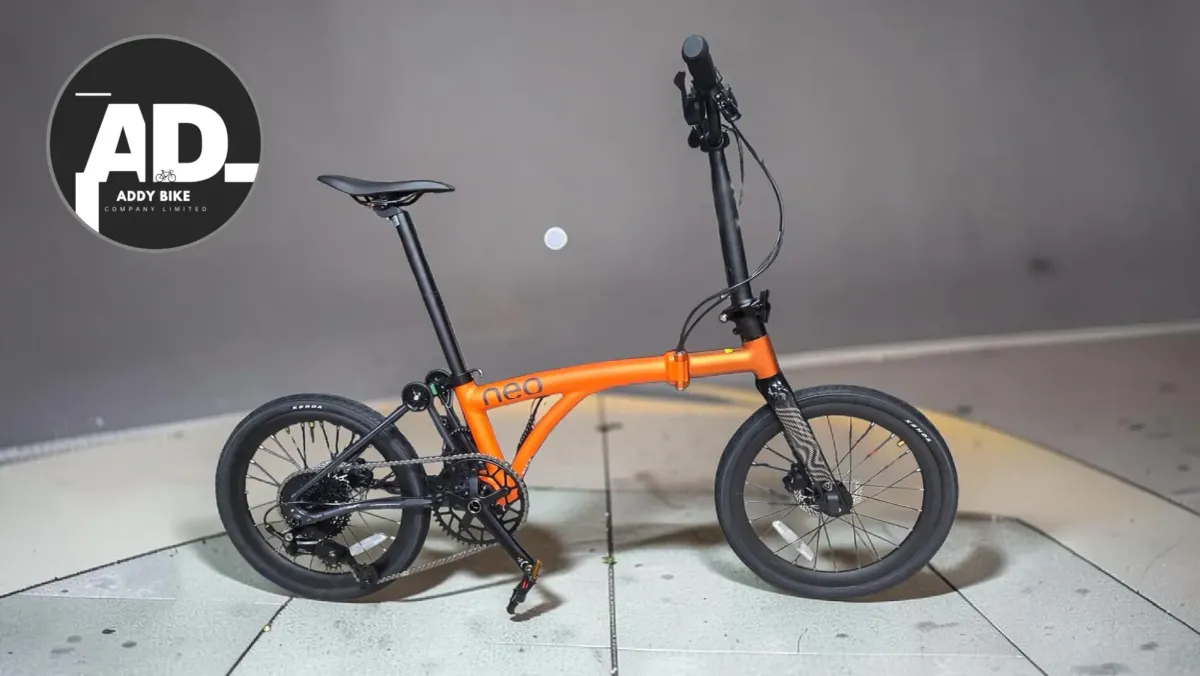
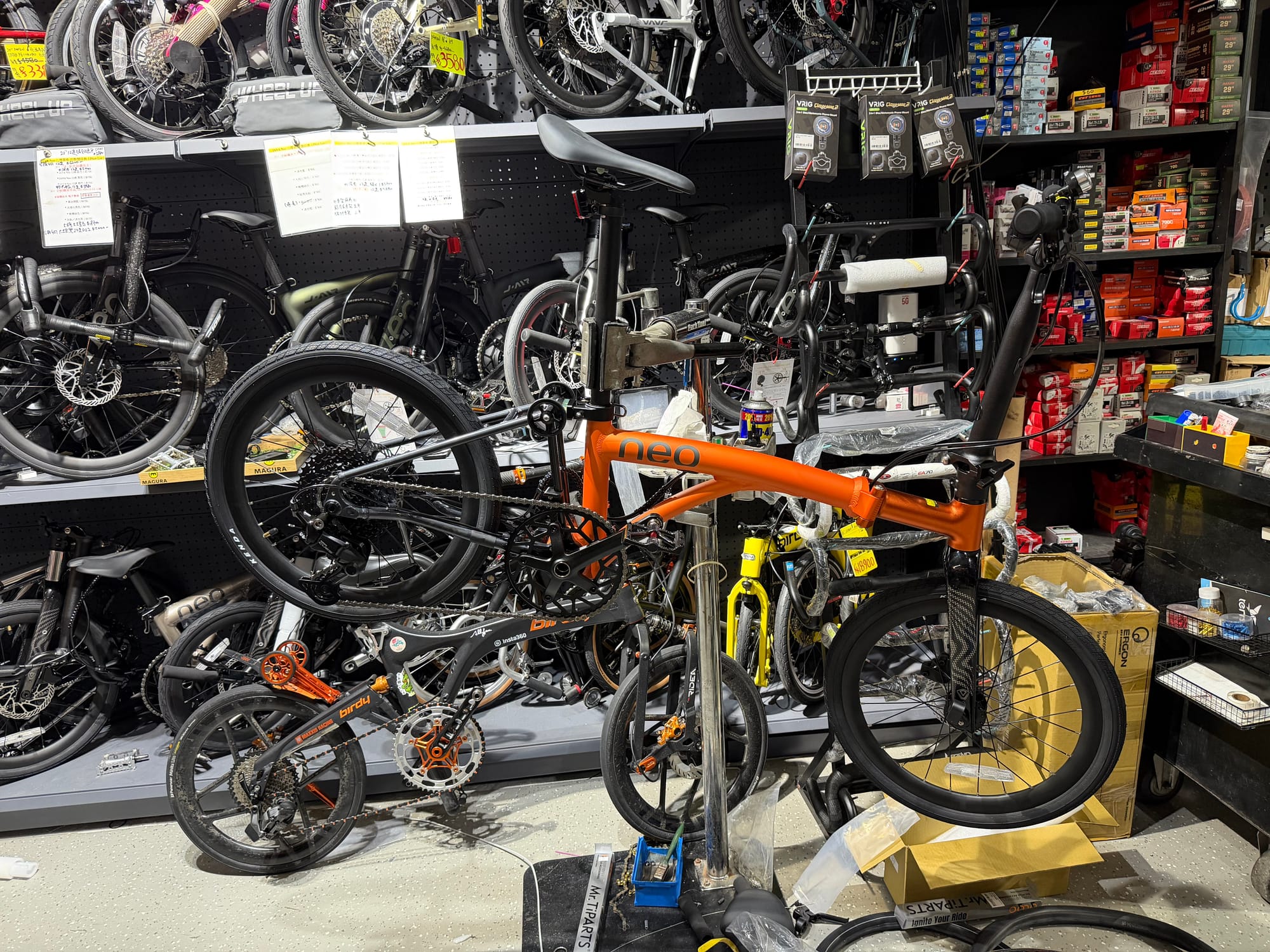
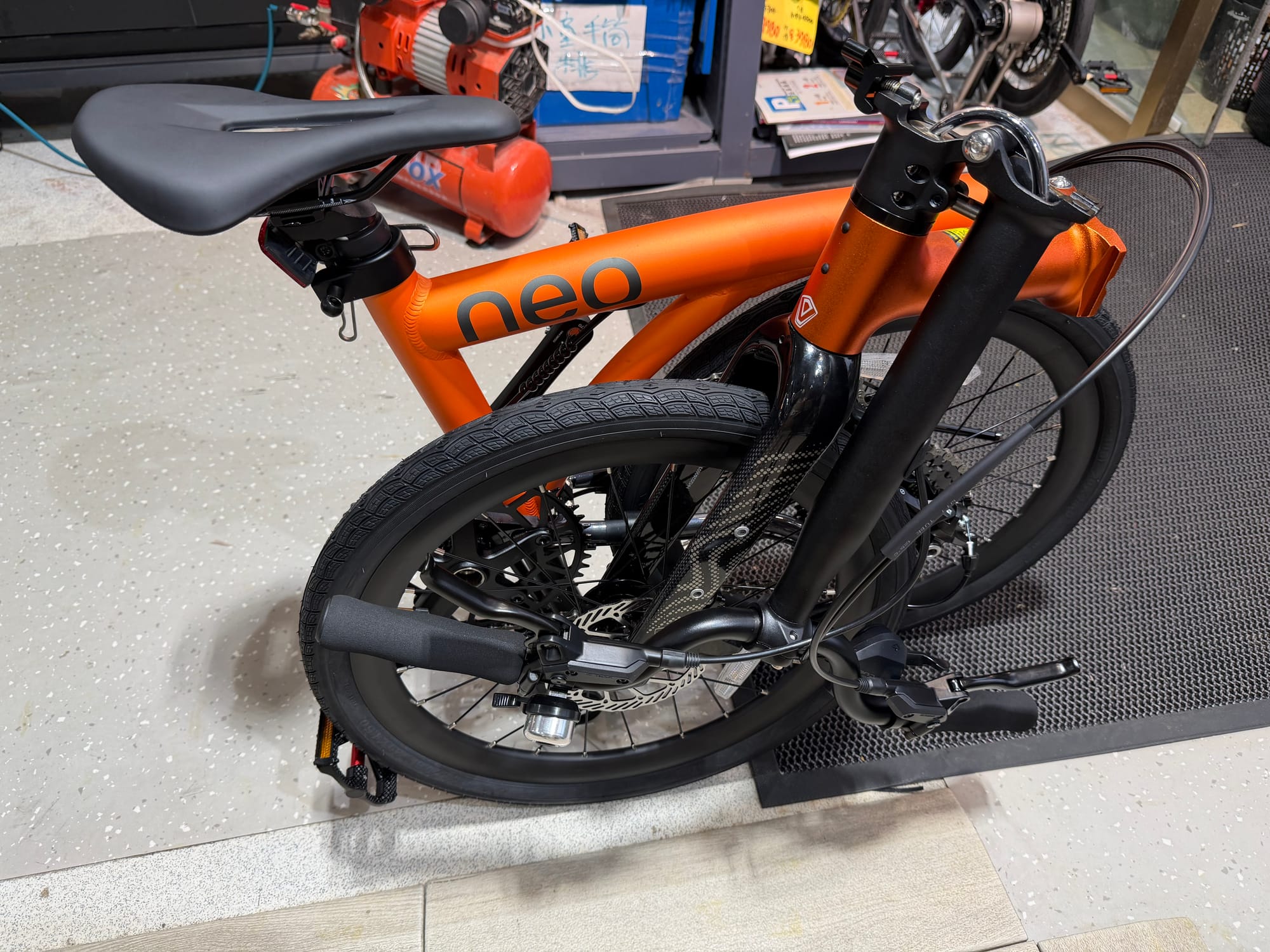
After a bit more research and a couple more shop visits, I came across the Java brand of bikes. They are a Shenzhen-based company most well-known for the Neo and Eco lines of Brompton-style bikes. Both the Neo and Eco come in multiple wheel sizes and have "premium" features like hydraulic brakes and all aluminum frames. The best part was the price. The 16-inch Eco starts at ¥1999 or less than US$300. After test riding both 16-inch and 20-inch models, I settled on the 20-inch Java Neo because it felt closest to a "normal" bike while still being very light. I ended up purchasing the 20-inch Java Neo in a two-toned orange version that was upgraded with a carbon fiber fork for HK$4,280 or US$545 from Addy Bikes in Tseung Kwan O, Hong Kong. This was essentially the same as the ¥3900 tax-inclusive mainland price minus the 9% VAT rebate.
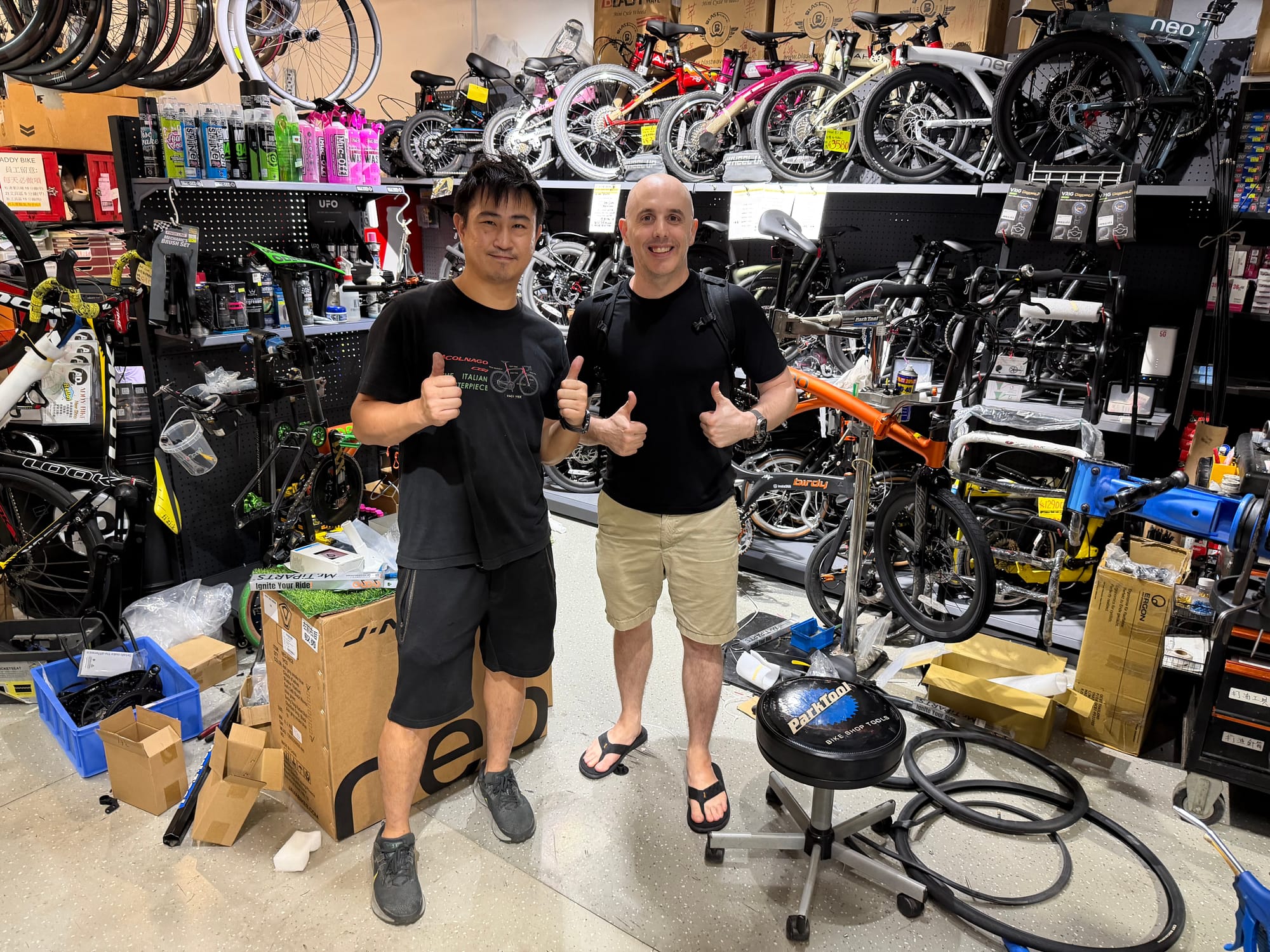
The bike is very easy to fold and unfold. Below is a video of the owner teaching me how to fold it.
Some more pictures of the bike. It looks a lot nicer in real life than I expected.
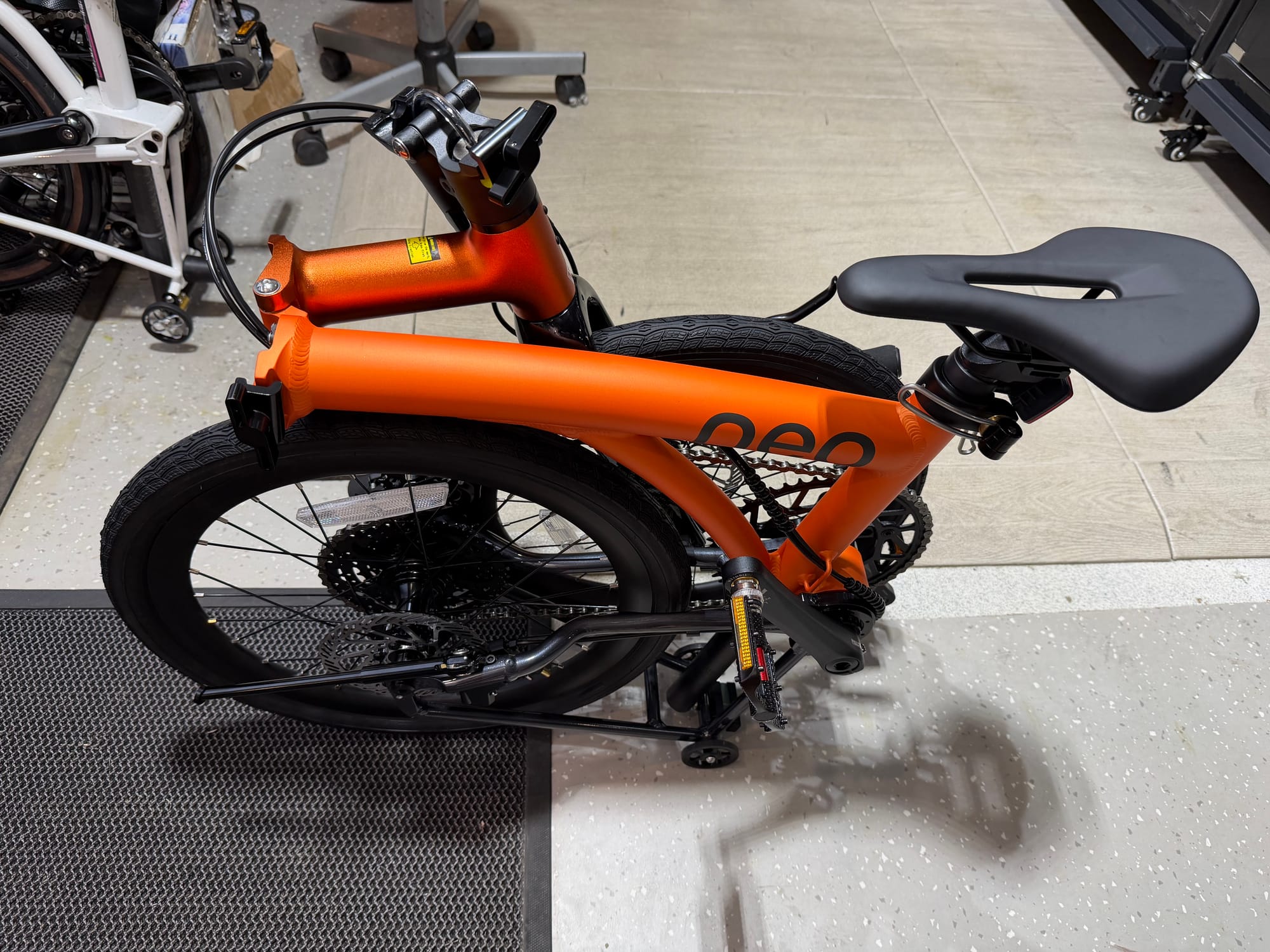
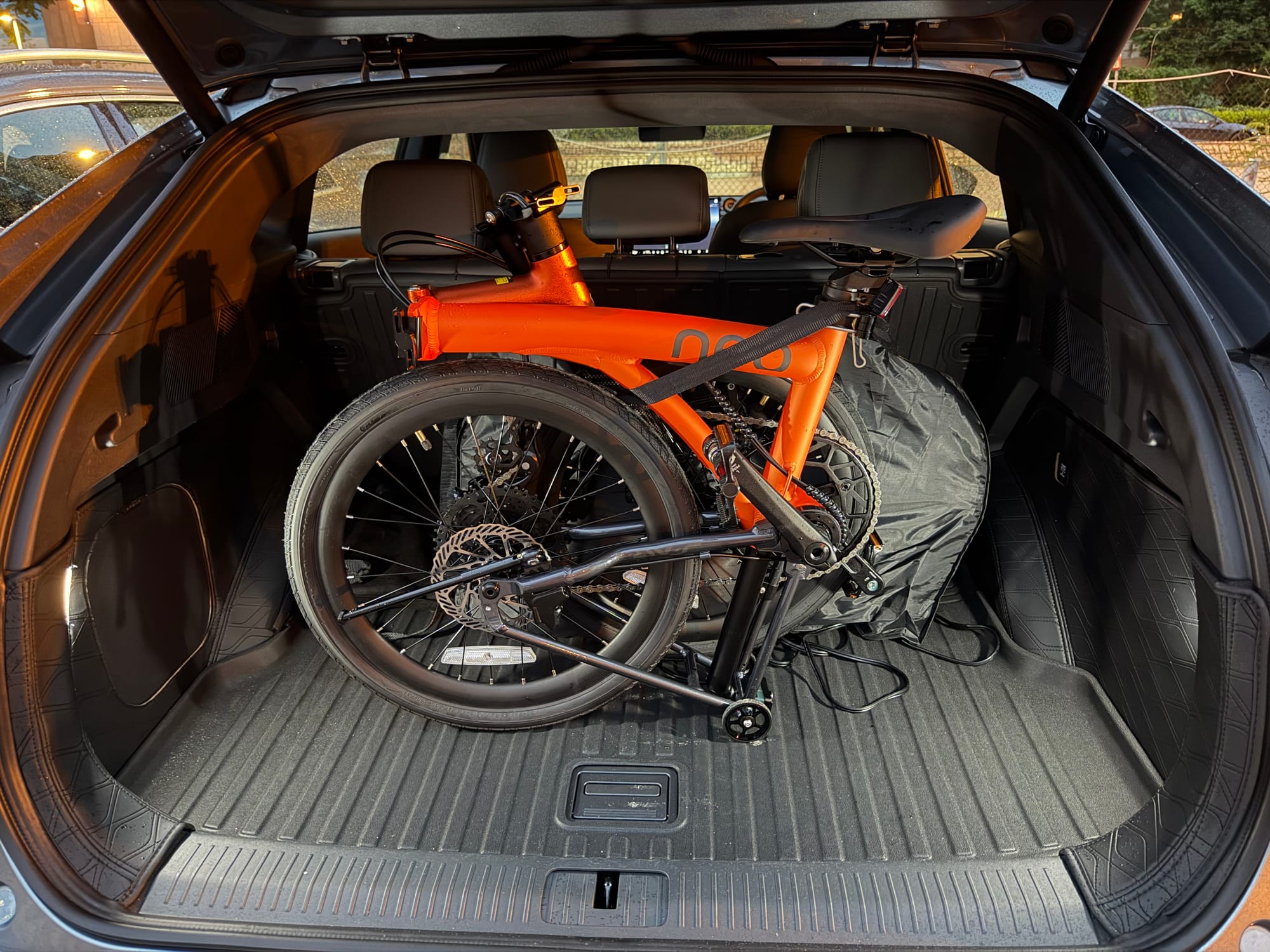
Folded, the 20-inch Java Neo ALF easily fits in my trunk.
Time to get riding!