
Signs for pedestrians should be made by walkers

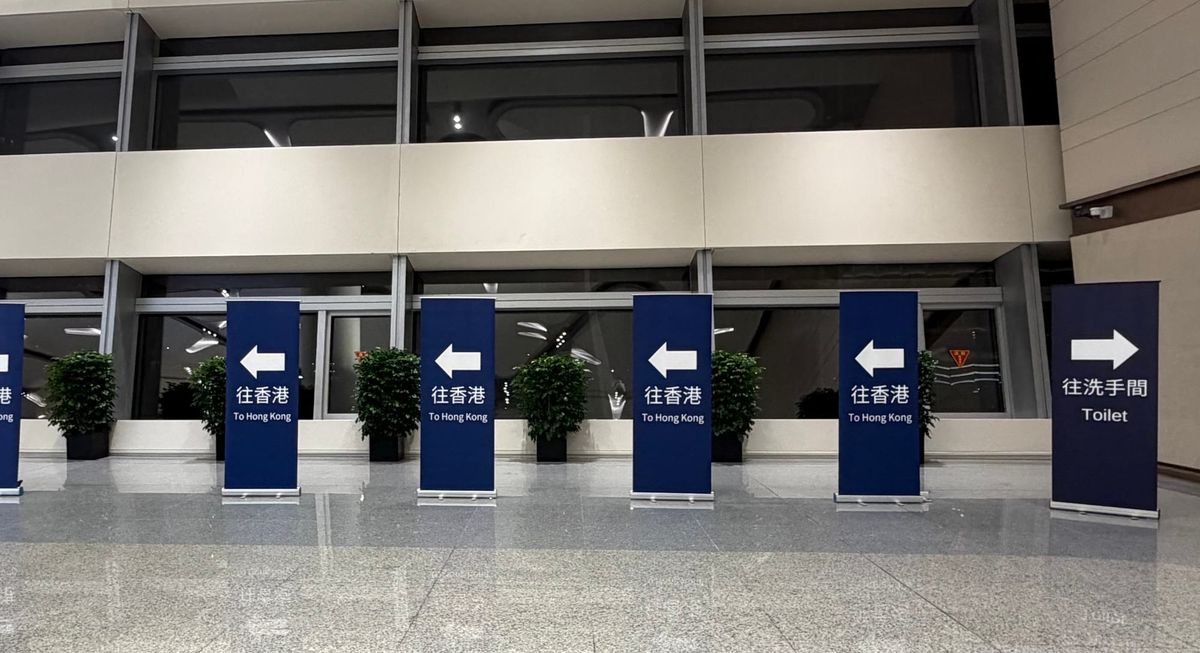
I was walking around after dinner in a mall in Hong Kong this evening looking for the mall's information desk. The sign hung from the ceiling of the mall indicated its direction by a question mark with a box around it and an arrow pointing in the direction one should walk. Every 50 or 100 meters or so or any time there was another path one could take such as an escalator, elevator or intersection between two parts of the mall, there was another sign. As long as I followed the signs, there was no way I could get lost.
This type of way-finding signage for pedestrians is typical in Hong Kong both in malls, streets, public transport interchanges, MTR stations, the airport and other areas open to the public. It is something that we take for granted and never really even notice until we try walking around other cities with different standards.
Dubai is one of those cities. I spent so much time walking around lost in the city both in the famous Dubai Mall and on the streets. I'd follow signs for destinations in the mall only to find that the signs for my destination would suddenly disappear. I would try backtracking to the last sign to make sure I'd followed its directions correctly only to find that it pointed me in a direction that had no more signs. It was as if the people who put up the signs had never tried following them themselves. This also made a lot more sense when I saw that the locals were actually driven around the mall in fancy golf carts.
The lesson here is that you want your way-finding signs for pedestrians designed and tested by people who actually walk.